
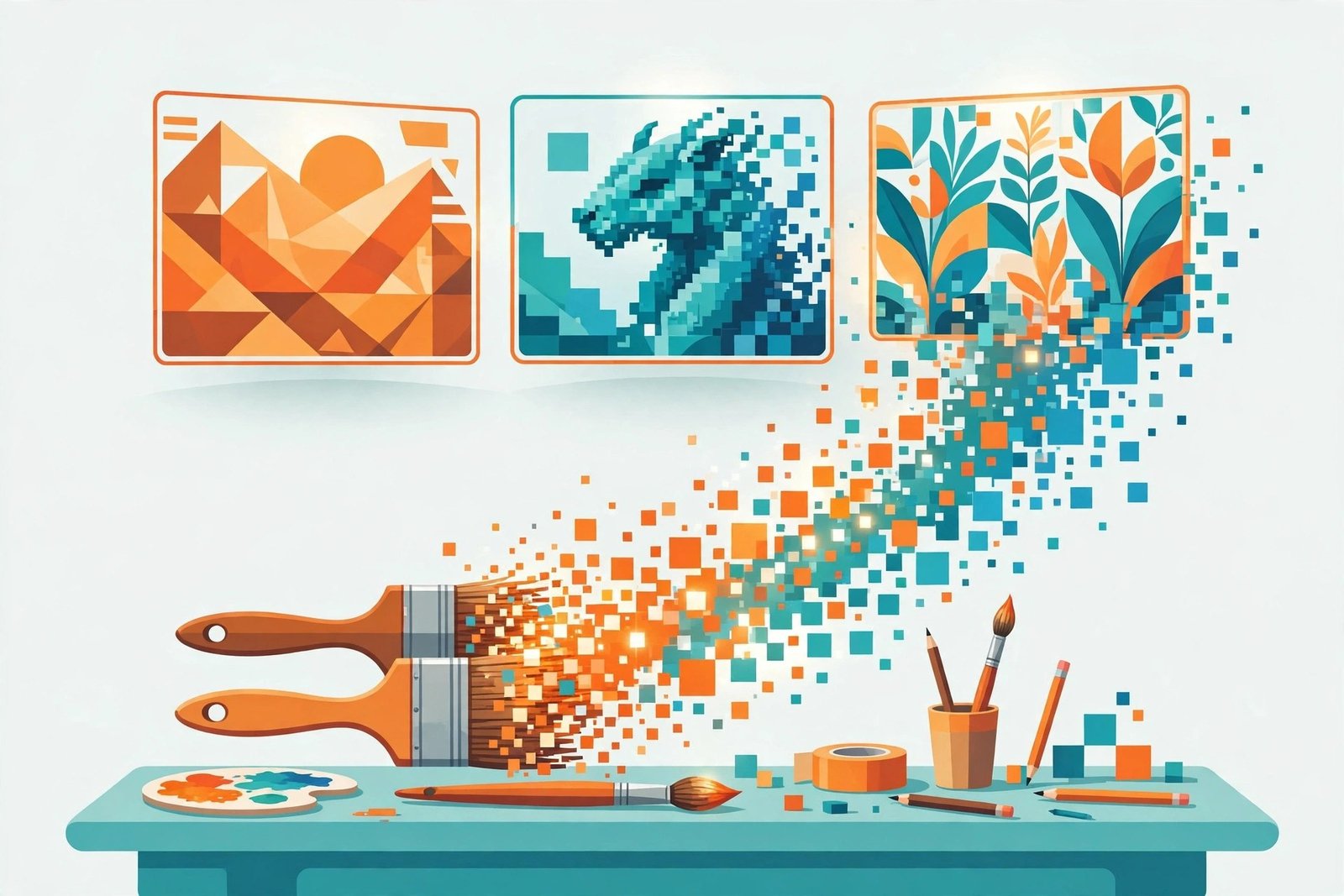
10 Best AI Image Generators for Business in 2026
Finding the best AI image generators for business use has become a real competitive advantage. Product mockups, ad creatives, social graphics, blog illustrations — teams that generate visuals in-house ship campaigns faster and spend less on stock photography. But not every AI art tool is built with commercial work in mind. Licensing terms, output consistency, and brand control vary enormously.
This guide compares ten of the best AI image generators for business through a practical lens: what each does well, where it falls short, and which teams it suits. Whether you need scroll-stopping ads or on-brand blog art, you will find your match here.
Quick Picks: Best AI Image Generators for Business by Use Case
| Use Case | Best Pick | Why |
|---|---|---|
| Ad creatives & brand art | Midjourney | Unmatched artistic quality |
| Precise prompts & text in images | DALL-E | Best prompt adherence, readable text |
| Enterprise & Adobe workflow | Adobe Firefly | Commercial-safety positioning, Photoshop integration |
| Games & product visuals | Leonardo AI | Specialized fine-tuned models |
| Full control / self-hosting | Stable Diffusion or Flux | Open weights, custom training |
| Social & posters | Ideogram | Best typography rendering |
| Icons & vector graphics | Recraft | Design-grade vector control |
| Fast & simple | Canva Magic Media | Zero learning curve, in-design |
What Businesses Should Look For in an AI Image Generator
Before the list, here is the evaluation lens we used to rank the best AI image generators for business. Consumer “wow factor” matters less than these four business criteria:
Commercial Usage Rights
The single most important factor. Some generators grant full commercial rights on paid plans; others restrict usage or require attribution. Always read the current terms of service before using generated images in ads or products — licensing terms change, so verify on the official site.
Style Consistency
Can the tool reproduce your look across dozens of images? Businesses need repeatable brand aesthetics, not one-off masterpieces. Tools with style references, custom models, or brand kits score higher here.
Ease of Use vs. Control
Marketing teams want push-button simplicity; design teams want fine control (inpainting, upscaling, aspect ratios). The best business tools offer both: simple by default, deep when needed.
Output Quality and Resolution
Ad creatives and print need high resolution and clean details — especially hands, text rendering, and product accuracy. We weighed real-world usability over demo cherry-picks.
The 10 Best AI Image Generators for Business
1. Midjourney
The artistic benchmark. Midjourney produces the most aesthetically striking images of any mainstream generator, with a distinctive cinematic quality that makes ad creatives and hero images pop. It runs through Discord (and increasingly its own web app), which is quirky but workable. Business strengths: unmatched artistic quality, strong community styles to learn from. Considerations: less precise control over composition; commercial rights depend on plan tier — check current terms.
2. DALL-E (OpenAI)
Tightly integrated with ChatGPT, DALL-E is the most accessible option for teams already in the OpenAI ecosystem. Its standout skill is following complex, detailed prompts and rendering readable text inside images — a genuine edge for ad headlines and infographics. Business strengths: prompt adherence, text rendering, conversational iteration. Considerations: artistic flair trails Midjourney; style consistency across batches takes effort.
3. Adobe Firefly
Firefly is Adobe’s answer, built to be commercially safe: it is trained on licensed and public-domain content, which reduces IP anxiety for enterprises. Deep integration with Photoshop (Generative Fill) and Express makes it the natural pick for teams already paying for Creative Cloud. Business strengths: commercial-safety positioning, Adobe ecosystem integration. Considerations: raw image quality can lag the leaders for purely artistic work.
4. Leonardo AI
A favorite among game studios and product teams, Leonardo offers fine-tuned models for specific styles (product shots, characters, anime) plus canvas-style editing. Its model library means you can pick a starting aesthetic instead of prompt-engineering from zero. Business strengths: specialized models, good control tools, API for production pipelines. Considerations: interface has more learning curve than push-button tools.
5. Stable Diffusion
The open-source powerhouse. Run it locally or via hosted services, fine-tune it on your own brand assets, and build it into products without per-image fees. For businesses with technical resources, nothing else offers this level of ownership. Business strengths: full control, no per-image costs when self-hosted, custom training. Considerations: requires technical setup; you own the licensing homework for training data.
6. Ideogram
Ideogram carved out its niche with best-in-class text rendering — logos, posters, and memes with legible wording, which most generators still botch. For social media teams and meme-speed marketing, that single skill is decisive. Need AI-generated presenters instead of stills? See the AI avatar tools for explainer videos. Business strengths: typography in images, fast social-ready output. Considerations: narrower artistic range than Midjourney or Firefly.
7. Recraft
Built for designers, Recraft generates vector-style art, icons, and illustrations with precise control over color palettes and positioning — plus genuinely usable text. If your brand needs crisp graphics rather than photographic art, Recraft belongs on your shortlist. Business strengths: vector output, brand color control, design-team workflow. Considerations: less suited to photorealistic imagery.
8. Flux
Flux emerged as the open-weights quality leader, rivaling closed models on photorealism and prompt adherence while remaining available for self-hosting and commercial fine-tuning. Businesses wanting top-tier quality with deployment flexibility should evaluate it seriously. Business strengths: excellent photorealism, open weights, fine-tuning friendly. Considerations: ecosystem and tooling still maturing versus incumbents.
9. Canva (Magic Media)
Not the most powerful generator, but arguably the most practical for non-designers: generate images directly inside the designs, presentations, and social templates your team already uses. For video-first content, pair it with the best AI video tools for YouTubers. Business strengths: zero learning curve, in-design generation, team collaboration. Considerations: less control and lower ceiling than dedicated tools.
10. DreamStudio (Stability AI)
DreamStudio is the polished hosted front-end for Stable Diffusion models — a middle ground between raw open-source power and consumer simplicity, with API access for builders. Solid pick for teams that want Stable Diffusion quality without managing infrastructure. Business strengths: accessible SD models, API, straightforward pricing structure. Considerations: feature set narrower than Leonardo or Firefly.
Comparison Table: Best AI Image Generators for Business
| Tool | Standout Strength | Best For | Learning Curve |
|---|---|---|---|
| Midjourney | Artistic quality | Ads, hero images, brand art | Moderate |
| DALL-E | Prompt adherence + text | Infographics, quick iterations | Easy |
| Adobe Firefly | Commercial safety, Adobe integration | Enterprise, Creative Cloud teams | Easy |
| Leonardo AI | Specialized models, control | Games, products, API pipelines | Moderate |
| Stable Diffusion | Full ownership, self-hosting | Technical teams, custom products | Steep |
| Ideogram | Text in images | Social, posters, memes | Easy |
| Recraft | Vector/design control | Icons, illustrations, brand kits | Easy |
| Flux | Photorealism + open weights | Quality-first self-hosting | Moderate |
| Canva Magic Media | In-design simplicity | Non-designers, fast social | Very easy |
| DreamStudio | Hosted SD simplicity | Balanced quality without infra | Easy |
Note: plans, pricing, and licensing terms change frequently — verify commercial rights on each official site before business use.
How to Choose the Right One
For ad creatives and brand campaigns: Midjourney or DALL-E, depending on whether you prize artistry or prompt precision.
For enterprise peace of mind: Adobe Firefly, especially inside a Creative Cloud workflow.
For product and engineering teams: Leonardo AI, Flux, or Stable Diffusion — pick by how much infrastructure you want to own.
For speed and social volume: Ideogram or Canva Magic Media.
For design-system graphics: Recraft, hands down.
Most serious teams end up with two: one artistic workhorse and one fast utility tool. That combination covers 95% of business visual needs.
Frequently Asked Questions
Can I legally use AI-generated images for my business?
Often yes, but it depends on the tool and plan. Many generators grant commercial rights on paid tiers, while free tiers may restrict use. Terms change frequently, and training-data litigation is still evolving. For high-stakes uses (packaging, trademarks), consult the tool’s current terms and consider legal advice.
Which AI image generator is best for product photography?
For product-style shots, Leonardo AI’s specialized models and Flux’s photorealism are strong picks, with Stable Diffusion fine-tuning as the power-user route. DALL-E also handles clean product compositions well from detailed prompts. Always disclose AI-generated imagery where regulations or platform policies require it.
Do AI image generators replace graphic designers?
No — they change what designers spend time on. Ideation, art direction, brand judgment, and final polish remain human work. The tools compress the gap between concept and draft, letting small teams produce at a scale that once required big budgets.
What resolution can AI generators output?
Most tools generate web-suitable resolutions natively (around 1024px) and offer upscaling features for larger needs. For billboard-scale print, plan on dedicated upscaling and human retouching. Check each tool’s max output specs against your use case.
Is Midjourney or DALL-E better for business use?
Midjourney wins on pure visual impact for ads and brand art; DALL-E wins on following precise instructions and rendering text. Businesses needing both often subscribe to both — they are complementary rather than interchangeable.
Conclusion
The best AI image generators for business are not one-size-fits-all. Match the tool to the job: artistry, precision, safety, speed, or control. Start with free tiers and trials, test each candidate on your actual brand assets, and double-check commercial licensing before anything goes public.
To see how these tools rank against the newest AI creative platforms, visit the outbidz.lol leaderboard — and if you have built an AI image tool, list it and let the market bid it to the top.



[…] Want to see where Writify lands against the tools the community actually uses? Check the outbidz.lol leaderboard, where AI writing tools are ranked by real votes — and if you’ve built a writing tool, list it and let the community decide. Pair it with a complete AI stack — see our ElevenLabs review for AI voiceovers and our guide to the best AI image generators for business. […]