The Best AI Photo Retouching Tools in 2026
Table of Contents
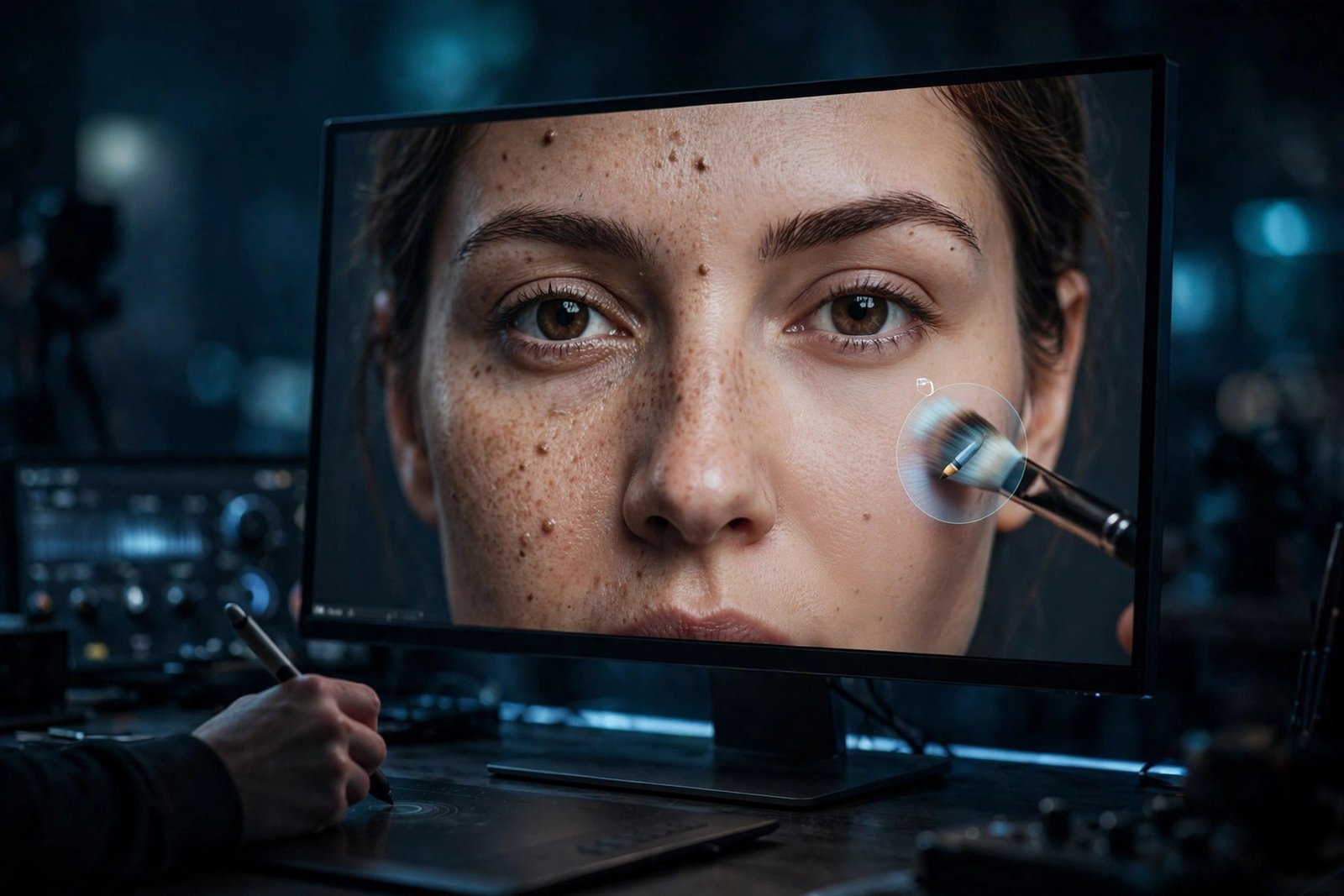
A bad edit screams. A good one whispers — and clients can’t tell why the photo just works. That’s the standard the best AI photo retouching tools are judged against now, and the bar moved fast. Three years ago, AI retouching meant a plastic-looking “beautify” slider. Today it means software that removes a stray hair, evens skin tone, and fixes a distracting background — while leaving the person’s face alone. The AI photo retouching tools below all clear that bar.
This isn’t really about laziness. It’s arithmetic. A wedding photographer delivering 800 images can’t spend 20 minutes per portrait. A realtor shooting 20 listings a week can’t hand-edit every kitchen. AI retouching tools exist so professionals can bill for shooting, not for dragging sliders at midnight. That arithmetic is exactly what modern AI photo retouching tools are built for.
I’ve sorted through the best AI photo retouching tools photographers actually keep installed — not the ones with the loudest marketing — and ranked them by what matters: result quality, batch speed, and whether the output still looks like a photograph. Every one of these AI photo retouching tools earned its place on real-world results.
Quick Picks: Best AI Photo Retouching Tools at a Glance
| Tool | Best for | Standout feature | Pricing |
|---|---|---|---|
| Adobe Lightroom | Everyday photographers | AI masking and denoise in your existing workflow | Paid plans available |
| Luminar Neo | Fast portrait retouching | One-click skin and body AI tools | Paid plans available |
| Topaz Photo AI | Rescue jobs | Sharpen, denoise, and upscale in one pass | Paid plans available |
| Imagen | Wedding and event volume | Learns your personal editing style | Paid plans available |
| Retouch4me | Studio-quality skin work | Plugin-grade retouching for Photoshop | Paid plans available |
| Adobe Photoshop | Precision and compositing | Neural filters and generative fill | Paid plans available |
What AI Retouching Actually Means Now: How AI Photo Retouching Tools Work
Forget the gimmicks. Modern AI retouching breaks into a few jobs: skin cleanup (blemishes, uneven tone, under-eye shadows), object removal (exit signs, trash cans, photobombers), background cleanup, noise reduction, and sharpening. The best AI photo retouching tools handle at least three of those jobs well. The mediocre ones do one trick and charge like they do five.
1. Adobe Lightroom — The Workhorse
If you already edit in Lightroom, its AI features might be all you need. The AI masking — subject, sky, background selection with one click — turned multi-minute selections into seconds, and the denoise tool salvages high-ISO shots that used to be write-offs. For batch work, nothing touches Lightroom: sync settings across 800 wedding photos, let AI masks adapt per image, and you’re done before lunch.
It won’t do heavy portrait retouching on its own. Skin still needs a light hand, and Lightroom’s tools are deliberately gentle. But as the foundation of a retouching workflow, it’s the safest recommendation on this list. You probably already pay for it. Use what you own first.
2. Luminar Neo — The Speed Demon
Luminar Neo is what happens when software decides retouching should take minutes, not hours. Its portrait tools — skin smoothing, face light, body reshaping, background blur — are genuinely one-click, and the results are better than one-click has any right to be. For real estate agents, small product sellers, and portrait photographers who need “good enough, fast,” it’s hard to beat.
The honest trade-off: one-click means less control. When Luminar guesses wrong, you’re fighting the automation instead of steering it. Professionals tend to use it as a first pass, then finish in Photoshop. Enthusiasts use it as the whole workflow and are perfectly happy. Know which one you are.
3. Topaz Photo AI — The Rescue Specialist
Topaz Photo AI does one job better than anyone: saving photos that should be unusable. Blurry? It sharpens. Shot at ISO 12800? It denoises. Client sent a 900-pixel image they want printed? It upscales. The face-recovery feature alone has rescued more event photos than I can count — it reconstructs blurry faces in a way that looks natural instead of painted.
It’s not a retouching suite; there are no skin tools or liquify brushes. Think of it as triage. Run problem images through Topaz first, then do your creative retouching elsewhere. Every working photographer I know keeps it installed for the “oh no” folder.
4. Imagen — The Style Cloner
Imagen takes a different approach: instead of giving you sliders, it learns how you edit. Feed it a few thousand of your past edits and it builds a personal AI profile that applies your style to new shoots — culling, cropping, white balance, exposure, the works. Wedding and event photographers shooting 3,000 images a weekend swear by it, because it collapses the most boring part of the job.
The catch is the learning curve at the start. The AI needs enough of your edited catalog to learn from, and photographers with inconsistent styles get inconsistent results. It also works on a credit system for full-resolution exports, so heavy shooters should check the pricing math. But if your style is consistent, nothing else comes close for pure volume.
5. Retouch4me — The Studio Secret
Retouch4me is a set of plugins — for skin tone, dodge and burn, eye vessels, fabric wrinkles — built by working retouchers who were tired of doing the same corrections manually. The results are the closest thing to a human retoucher’s hand that AI currently produces: skin keeps its texture, corrections are subtle, and nothing looks airbrushed.
It’s priced per plugin, which adds up if you want the full set, and it runs inside Photoshop or as a standalone — so there’s a learning curve if you’re not already in that ecosystem. But for beauty, fashion, and headshot photographers where skin quality is the product, it’s the professional pick. Clients notice the difference, even if they can’t name it.
6. Adobe Photoshop — The Precision Tool
Photoshop‘s neural filters and generative fill changed what retouching means. Need to remove a person from a background? Paint over them and the AI rebuilds the scene. Want to change a subject’s expression slightly, smooth skin, or transfer makeup looks? Neural filters do in seconds what took 30 minutes of manual work.
Photoshop is overkill for batch retouching — that’s Lightroom’s job — but for hero images, the ones that go on the homepage or the album cover, nothing else gives you this level of control. The subscription stings, but if you’re a professional, you’re paying for it anyway.
Choosing the Right AI Photo Retouching Tool for Your Work
Match the tool to the job, not the hype:
- High-volume events (weddings, sports): Imagen for style-matched batch editing, Lightroom for everything else.
- Portraits and headshots: Luminar Neo for speed, Retouch4me for quality. Pick one based on your client tier.
- Real estate and product: Luminar Neo or Lightroom. You need fast and clean, not artistic.
- Rescue and restoration: Topaz Photo AI, full stop.
- Hero images and fine art: Photoshop, with patience and coffee.
Most professionals end up with two: a batch tool and a precision tool. That’s not upselling — it’s just how the work divides. Pairing two AI photo retouching tools this way covers nearly every workflow.
Frequently Asked Questions
Will AI retouching make photos look fake?
Only if you let it. The current generation of tools is remarkably good at restraint — skin texture preservation, natural tone mapping, subtle corrections. The “plastic” look comes from pushing sliders too far, not from the AI itself. Dial everything back 30% from your first instinct and you’ll land in the natural zone. Restraint is what separates the best AI photo retouching tools from gimmicky filters.
Can AI retouching replace a professional retoucher?
For volume work and standard corrections, largely yes — that’s why the tools exist. For high-end beauty, fashion editorials, and complex compositing, human retouchers still win on judgment and taste. Most pros now use AI for the first 80% and finish the last 20% by hand.
What’s the best free AI photo retouching tool?
Free options are limited in this space. Canva offers basic AI editing including background removal on its free tier, which covers simple jobs. For serious retouching, though, the meaningful tools are paid — the free tier of most listed tools is enough to test, not to run a business on.
Do AI photo retouching tools work on group photos?
Yes, with caveats. Face detection handles multiple faces well for skin smoothing and blemish removal. But corrections apply per-face, so results can vary across a group — one face might get more smoothing than another. Always zoom in and check each face before delivering.
How do I keep retouched photos looking natural?
Three rules: preserve skin texture (never fully smooth), keep some asymmetry in the face, and match your corrections to the image’s lighting. The biggest giveaway of over-retouching is skin that’s smoother than the lighting allows. When in doubt, step away for an hour and look again with fresh eyes.
Final Thoughts on AI Photo Retouching Tools
The best AI photo retouching tools in 2026 aren’t about replacing your eye — they’re about replacing your tedium. Lightroom remains the foundation. Luminar Neo wins on speed, Topaz on rescue work, Imagen on volume, Retouch4me on skin quality, and Photoshop on precision. The right pick is the one that matches the work you actually do, not the work you wish you did. Revisit these AI photo retouching tools yearly — the field keeps improving.
Start with what you own, add one specialist tool for your biggest bottleneck, and spend the hours you save on shooting — that’s the part clients actually pay for. That is the smartest way to adopt AI photo retouching tools without overspending.
Curious how these editing tools stack up against the broader AI landscape? Browse the outbidz.lol leaderboard, where the community ranks the AI tools worth your money — and if you built one of them, claim your listing and let photographers vote.